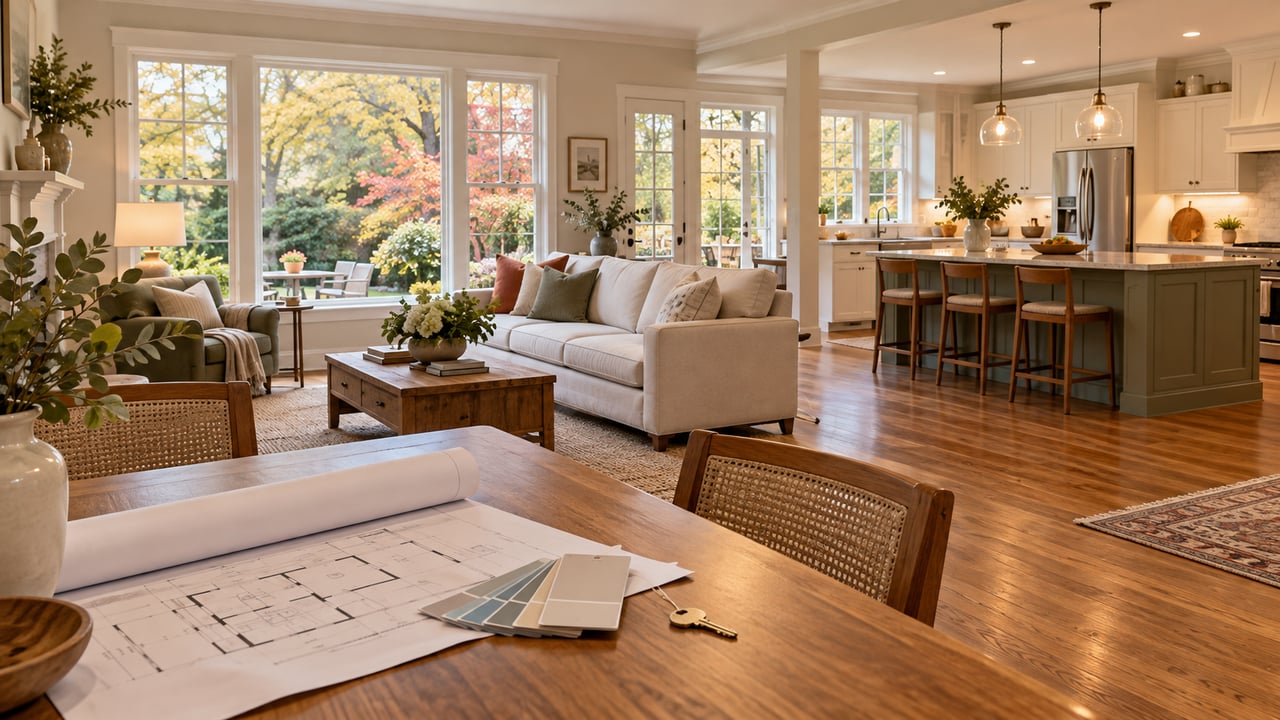
Your home may hold years of memories, but does it still support the way you want to live?
Perhaps the stairs feel less convenient, the yard requires more attention than you want to give it, or you’re ready to spend less time maintaining a house and more time enjoying life.
As a Maryland Realtor, I believe this decision starts with one question: What would make everyday life easier, and can your current home realistically provide it?
Renovating and relocating can both be worthwhile. The right choice depends on your home’s layout, your budget, your connection to the area, and your priorities for the years ahead.
Start With Your Everyday Routine
Before calling a contractor or touring homes, I recommend looking at how you use your current space.
Can you reach your bedroom, a full bathroom, kitchen, and laundry without using stairs? Is the entrance convenient from your driveway or garage? How much effort goes into cleaning, landscaping, and repairs?
Consider your location, too. Think about your regular trips to shopping, medical appointments, recreation, and the people you enjoy seeing. A convenient floor plan matters, but so does a location that supports your routines.
When Renovating Makes Sense
Staying put may be a good option if you love your location and your home can be adapted within a comfortable budget.
Some improvements are relatively modest, such as better lighting, lever-style door handles, or professionally installed grab bars. Others—including a curbless shower, wider doorways, or a main-level bedroom and full bathroom—require more planning.
Harvard’s Joint Center for Housing Studies reported in its 2023 housing report that fewer than 4% of U.S. homes offered three foundational accessibility features: single-floor living, a no-step entrance, and wide hallways and doorways. That finding uses 2011 data, so it provides historical context rather than a current Maryland housing statistic. jchs.harvard.edu
The National Association of Home Builders reported in June 2025 that 56% of remodelers were involved in aging-in-place modification work, with common projects including grab bars, curbless showers, and widened doorways. nahb.org
These findings offer a reason to evaluate your home carefully. They don’t mean every homeowner needs a major renovation.
My recommendation is to obtain written estimates for the changes you actually need. Ask about permits, construction timelines, bathroom or kitchen downtime, and an allowance for unexpected work. If accessibility is a central concern, involve an appropriately qualified specialist.
I also encourage homeowners to separate personal value from resale value. A renovation may improve your comfort substantially without returning its full cost when you eventually sell.
When Moving Deserves a Closer Look
Relocating may make sense when adapting your home would require extensive work—or when renovations would still leave you with more upkeep than you want.
A different property could offer a more convenient layout, less outdoor maintenance, or a location closer to your regular destinations. That might mean a condominium, a smaller detached home, a rental, or a home in a 55+ community.
When evaluating properties, I look beyond phrases such as “main-level living.” We should check the entrance, garage access, laundry location, shower threshold, and any stairs between the rooms you use most.
For a condominium, the route from parking to the unit and elevator access deserve attention, too. A smaller or newer home still needs to work for your individual needs.
Could Your Equity Help You Make the Move?
Your home equity is the difference between your home’s value and the debt secured against it. Selling may allow you to put some of that equity toward your next home.
When helping you plan, I focus on estimated net sale proceeds: what may remain after mortgage and other lien payoffs, selling expenses, and any agreed repairs or concessions.
We then compare that amount with the full cost of moving and purchasing your next property.
For a Maryland move, my comparison would include:
- Purchase price and closing costs.
- Any new mortgage payment.
- Property taxes and insurance.
- HOA or condominium fees, if applicable.
- Utilities and maintenance.
- Moving expenses and any immediate improvements.
We would verify the figures for the specific property and transaction. The goal is a housing budget that feels comfortable and leaves room for your other priorities.
What I Would Check in a Maryland 55+ Community
A 55+ community may appeal to you if you want shared amenities, opportunities to participate in activities, or fewer exterior maintenance responsibilities. However, offerings vary, and I recommend reviewing each community individually.
What do the fees cover?
Confirm who handles landscaping, snow removal, exterior repairs, and major replacements. Association coverage may reduce some responsibilities while leaving others with the homeowner.
Which amenities would you use?
Tour the facilities and review the activity calendar. Consider whether the amenities fit your interests and justify their place in your monthly budget.
Does the home meet your needs?
Check accessibility features directly. An age designation alone does not guarantee a no-step entrance, accessible bathroom, or convenient layout.
What do the community documents require?
Review occupancy requirements, guest policies, pet and rental rules, and procedures for making changes to your home.
What is the financial picture?
Review available budgets, reserves, and information about existing or proposed special assessments.
If controlled access or security features matter to you, verify what is actually provided rather than assuming those services come with every 55+ community.
Put Both Options Side by Side
Before deciding, I recommend comparing a realistic renovation plan with a realistic moving plan.
Consideration | Renovate and Stay | Sell and Relocate |
|---|---|---|
Upfront expenses | Renovation estimates and contingency | Selling, purchasing, and moving costs |
Monthly budget | Current expenses plus any renovation financing | New housing expenses and community fees |
Daily convenience | What the proposed changes would solve | What the next property would provide |
Maintenance | Responsibilities that remain | Responsibilities retained or covered by an association |
Disruption | Construction and contractor coordination | Packing, transaction timelines, and moving |
You may discover that a few thoughtful improvements will make your current home work well for years. You may also find that relocating offers the convenience you’ve been missing.
My role is to help you understand your options, compare the numbers, and choose a home that supports the life you want.
Thinking about renovating or relocating in Maryland? Let’s start with your home’s estimated market value and likely net sale proceeds, then explore properties that match your priorities. Together, we can create a plan for your next chapter.