
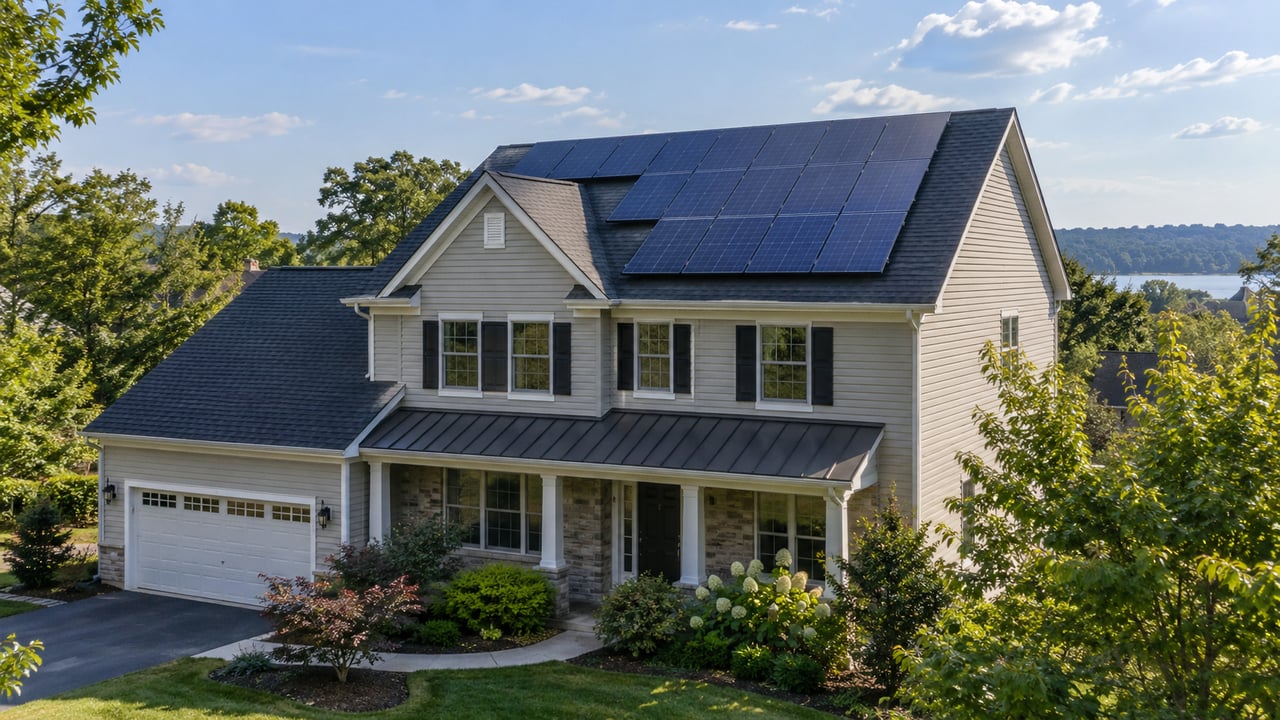
Solar panels have become an increasingly visible feature on homes throughout Maryland. For some homeowners, they offer a way to use renewable energy and potentially reduce reliance on electricity supplied by the utility company. For buyers, a solar-equipped home may be appealing—but understanding the system, its ownership, and its financial obligations is essential before making a decision.
Whether you are considering installing solar panels, buying a home that already has them, or preparing a solar-equipped property for sale, here are the most important factors to understand.
How Residential Solar Panels Work
Residential solar panels capture sunlight and convert it into electricity that can be used in the home. The amount of electricity produced depends on several factors, including:
- The size and design of the solar system
- Roof orientation, pitch, and exposure to sunlight
- Shading from trees or nearby structures
- Weather and seasonal conditions
- The age and condition of the equipment
- The household’s electricity usage
Solar panels may reduce the amount of electricity purchased from the utility provider, but savings are not guaranteed. Energy costs and solar production vary by home, system, utility company, and household usage.
Owned, Financed, or Leased: Why the Difference Matters
One of the first questions to ask about a solar-equipped home is how the system is owned. Solar panels generally fall into one of four categories:
Owned outright
The homeowner owns the solar system without an outstanding solar loan or lease. Buyers should still confirm ownership, review warranties, and determine whether any continuing obligations apply.
Financed
The panels were purchased using a loan that may still have an outstanding balance. The seller may need to pay off the loan at settlement, or a qualified buyer may be able to assume it, depending on the lender’s terms.
Leased
The homeowner pays a solar company to use the system for a specified period. A buyer may need to qualify for and assume the lease, or the agreement may need to be resolved before the transaction is completed.
Power purchase agreement
Under a power purchase agreement, the solar provider typically owns the equipment, and the homeowner purchases the electricity it generates under agreed terms.
These arrangements can affect financing, settlement, monthly expenses, and the timing of a real estate transaction. Buyers and sellers should obtain the complete agreement and consult the appropriate real estate, lending, legal, and solar professionals early in the process.
Potential Benefits of Solar Panels
Depending on the system and the property, solar panels may offer benefits such as:
- Reduced reliance on utility-supplied electricity
- Potential savings on household energy costs
- Access to renewable energy generated at the property
- Greater awareness and control of household energy use through monitoring tools
- Appeal to buyers who consider energy features when comparing homes
The presence of solar panels does not guarantee a specific level of savings, an increase in property value, or eligibility for a particular tax credit or incentive. Any projected financial benefit should be supported by actual system records and reviewed independently.
What Buyers Should Review
Before purchasing a home with solar panels, buyers should request as much documentation as possible. Important items may include:
- Proof of ownership or a copy of the lease, loan, or power purchase agreement
- Installation date and installer information
- Solar panel and inverter specifications
- Permits, inspections, and utility interconnection documents
- Equipment, workmanship, and roof-penetration warranties
- Recent electricity bills and solar production reports
- Maintenance and repair history
- Information about roof age and condition
- Homeowners insurance requirements or coverage considerations
- Details about any credits, incentives, renewable-energy certificates, liens, transfer fees, or continuing obligations
A qualified home inspector can evaluate visible conditions, but a separate inspection by a solar professional may be appropriate. Buyers should also speak with their lender and insurance provider because solar agreements and equipment may affect underwriting or coverage.
What Sellers Should Prepare
Sellers can help reduce delays by organizing solar documentation before listing the property. This may include ownership records, agreements, warranties, utility bills, production reports, permits, repair records, and contact information for the installer or servicing company.
Marketing should accurately describe whether the system is owned, financed, leased, or governed by a power purchase agreement. Sellers and their agents should avoid making unverified claims about guaranteed savings, future energy costs, tax benefits, or increased resale value.
Clear documentation allows prospective buyers to evaluate the system along with the home’s other features and operating costs.
Roof Condition and Future Maintenance
Because solar panels are commonly mounted on the roof, buyers and homeowners should consider the roof’s age, expected lifespan, and current condition. If roofing work becomes necessary, the panels may need to be removed and reinstalled by a qualified professional.
It is helpful to understand who is authorized to service the system, whether removal and reinstallation are covered by a warranty, and what costs may apply. Maintenance requirements should be confirmed with the manufacturer, installer, or current service provider.
Solar Incentives and Tax Considerations
Solar incentives, tax credits, utility programs, and renewable-energy policies can change. Eligibility may depend on the installation date, ownership structure, location, tax circumstances, and current program rules.
Homeowners and buyers should verify current information through official government and utility sources and consult a qualified tax professional. A real estate agent can help identify questions and transaction documents but should not provide tax or legal advice.
Making an Informed Real Estate Decision
Solar panels can be a meaningful home feature, but the value and financial impact of a system are specific to each property and household. The best approach is to review the documentation, confirm the ownership structure, examine actual energy and production records, and obtain guidance from qualified professionals.
If you are buying or selling a Maryland home with solar panels, an experienced real estate professional can help you prepare the right questions, organize available documents, and coordinate with the professionals involved in the transaction.
This article is provided for general educational purposes only and is not legal, tax, lending, insurance, engineering, or solar-performance advice. System output, savings, costs, transfer requirements, and incentive eligibility vary and are not guaranteed. Equal Housing Opportunity.